
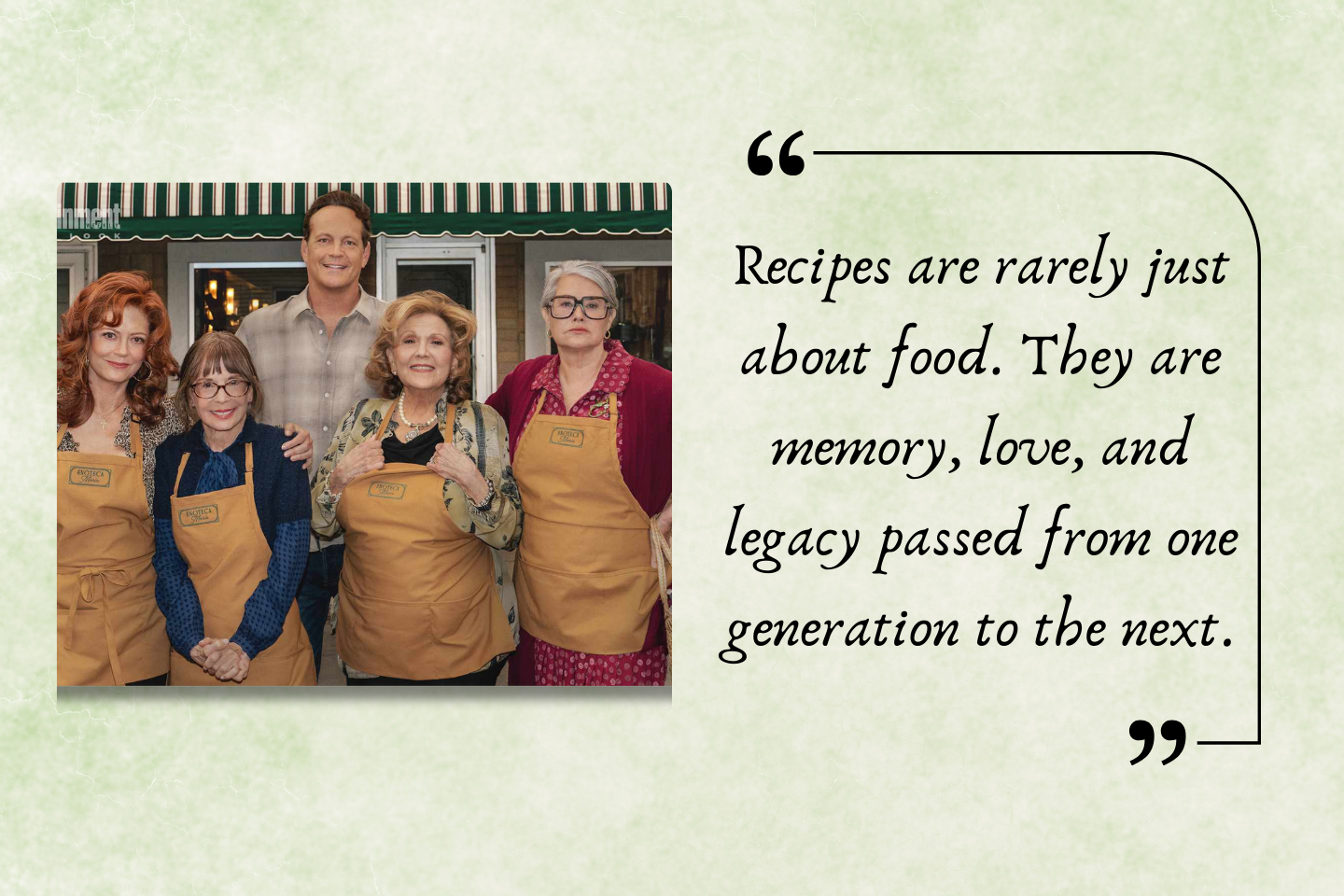
There’s a moment in the movie, Nonnas — quiet, easily missed — that carries the weight of everything I have built Memora to honor.
It comes late in the film. Joey, the lead character, is emotionally spent, drifting, unraveling. Then he opens a letter from his mother. Inside are the recipes he’s been desperately trying to recreate. Recipes from a kitchen he remembers not just with his mind, but with his whole being. The textures. The aromas. The unspoken love.
Earlier, there were wordless exchanges between Joey’s mother and his Nonna. Glances that said more than dialogue ever could. Moments where they quietly witnessed his growing connection to food — not as ambition, but as memory.
So when she writes those recipes down, it doesn’t feel like a simple act. It feels like instinct. As if she knew, long before he did, that one day he would need them. That they would guide him back to himself.
Isn’t that what mothers do? What grandmothers do? What caretakers do?
They see our longing before we do. They prepare the medicine before we ask for it. They sense our lowest moment before it arrives — and leave us something to hold when we get there.
Food, in that moment, becomes more than nourishment. It becomes a bridge. A quiet balm. A refuge where conflict cannot reach. It offers something rare in our hurried lives: simplicity, comfort, and connection — all without demanding words.
How often have we taken sanctuary in a kitchen when words failed us? How often has a simple dish said what we couldn’t? Food carries us. It remembers for us. It allows us to be held — without explanation, without apology.
Sometimes it reconnects people who’ve drifted. Sometimes it lets a parent whisper, “I see you,” without saying anything at all. Sometimes it’s the last thread connecting us to someone who’s gone.
The truth is, we don’t always recognize legacies while they’re being woven. They often take the shape of repetition, ritual, and quiet acts of care. Only in hindsight — when we pause to truly see — do we understand the depth of what we were handed.
Which is why reflection matters.
To pause.
To feel the weight of what a shared meal, a handwritten recipe, or a passed-down technique actually represents.
And if we have the courage — to write it down. In a journal, a note, a personal archive. Because food is memory. And memory, written down, becomes legacy.
We don’t always see the sacred in the everyday. The grandmother who taught you to fold dumplings. The father who showed you how to season cast iron. The neighbor who shared her secret for perfect pie crust. These moments feel ordinary when they happen. It’s only later — sometimes years later — that we realise we were receiving something precious.
At Memora, we help families preserve these legacies — not just through dates and timelines, but through the small, soulful details that carry the deepest meaning. Because the recipe is rarely just about the food. It’s about the hands that prepared it. The love that seasoned it. The moment it held.
And perhaps, like Joey, it’s something we don’t realize we need… until it brings us back to ourselves.
What recipes are waiting to be written down in your family? What flavors hold your stories?